
For many parents, the mere mention of GCSE Maths can bring back memories of confusing equations and exam-room stress. But as your child approaches their Year 11 exams, your encouragement and structure at home can make a massive difference. You don’t need to be a calculus expert to help them succeed; you just need to provide the right environment, tools, and emotional backup.
According to data from the UK Department for Education, active parental engagement in a teenager’s education can improve their exam outcomes by up to 15%.
Here are five practical, highly effective ways you can support GCSE Maths learning at home without needing a mathematics degree yourself.
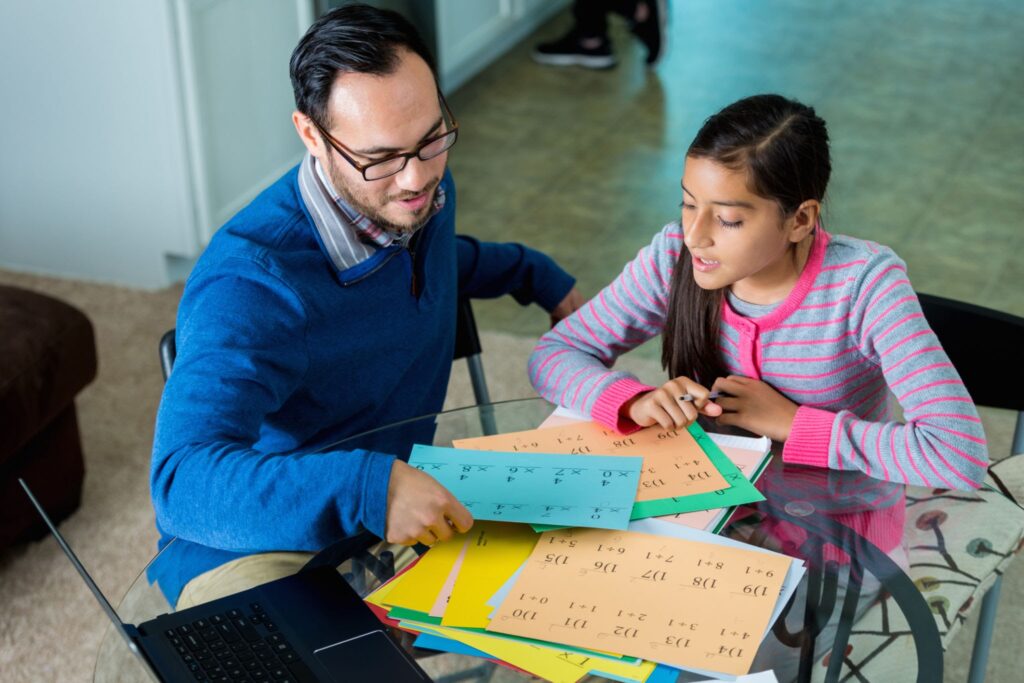
1. Focus on Process, Not Just the Final Answer
When helping your child, it is incredibly easy to focus solely on whether they got a math problem right or wrong. However, the current GCSE grading system heavily awards marks for the working out, even if the final calculation has a minor slip-up.
- Ask Open-Ended Questions: Instead of saying “That’s wrong,” try asking “Can you walk me through the steps you took to get there?”
- Emphasize Mistakes as Progress: Normalize making errors. In mathematics, troubleshooting a wrong step is often where the deepest learning happens.
2. Master the Exam Specifications and Exam Boards
Not all GCSE Maths exams are identical. The content can vary depending on whether your child’s school uses AQA, Edexcel, or OCR exam boards. Additionally, they will either be sitting the Foundation Tier (grades 1 to 5) or the Higher Tier (grades 4 to 9).
Knowing their specific exam board allows you to help them source the exact past papers they need. Regularly practicing under timed conditions using authentic past papers is widely considered the single most effective revision strategy available.
3. Establish a Consistent, Distraction-Free Study Routine
Consistency beats cramming every single time. A frantic 6-hour study session the night before a mock exam is nowhere near as effective as 25 minutes of focused daily math practice.
Help your child set up a dedicated revision space that is quiet and completely free from smartphone distractions. To optimize their focus, encourage them to use the Pomodoro Technique:
- Focus entirely on math problems for 25 minutes.
- Take a 5-minute break away from screens.
- Repeat 3 to 4 times, then take a longer break.
4. Integrate Math into Everyday Life
Show your teenager that math isn’t just an abstract academic hurdle—it’s a highly practical life skill. Finding real-world applications helps solidify difficult mathematical concepts:
- Percentages & Fractions: Ask them to calculate the discount or final price of sale items while shopping.
- Ratios & Scaling: Scale up a baking recipe from 4 servings to 6 or 8 servings together in the kitchen.
- Data & Statistics: Discuss charts, graphs, or percentages found in current news articles or sports stats.
5. Leverage Structured Online Learning Platforms
Sometimes, despite your best efforts, a specific topic like quadratic equations or trigonometry requires expert breakdown. That is where structured, curriculum-aligned online resources become invaluable.
Using trusted online modules allows your child to learn at their own pace, re-watch difficult tutorials, and take interactive quizzes to track their progress.
If you are looking for an affordable, highly targeted way to supercharge your child’s revision, explore the specialized interactive dashboard on our eTutorials GCSE Landing Page. Our platform breaks down complex topics into bite-sized, easy-to-digest video lessons designed specifically to lift target grades.
The Golden Rule for Parents: Your primary job is to manage their exam anxiety and keep them motivated. Keep a positive attitude toward math, celebrate their small victories, and remind them that consistency pays off.
For comprehensive study guides, expert tips, and ongoing academic resources for your child’s educational journey, visit our main hub at eTutorials. Let’s make exam season a confident success together!